
J’ai dû ramener du bois pour refaire le toiture de notre abri. Il n’y en avait pas assez pour justifier un livraison (qui coutera la moitié du prix du matériel), mais c’était quand même un poil trop long pour notre camionnette. Je ne suis pas convaincu que c’est ce que Renault avait prévu quand elle ajoutait le girafon dans l’Express.
Comment (ne pas) charger une camionnette!
Posted in Abri, General @fr
1 Comment
How not to load a van!
I had to collect some wood for re-roofing the shed. The quantities were too small to justify a delivery (which would have cost half as much again as the material), but a little long for our small van. I’m not sure that this was what Renault had in mind when they put the ladder hatch in the Express.
Posted in General, Shed
Leave a comment
Our house…
in the middle of this… forest!
 I stopped in at the sawmill (visible in the left of the image) to check up on the schedule for the frame, and while I was there, I asked where the wood for our frame would be coming from (Ideally we’d have liked to get most stuff from France to avoid large amounts of shipping). The plantation of trees that the green arrow is pointing at is the plantation of Douglas Fir that will be used to make our frame. Meaning that from harvest to our house, the wood will travel less than 25km. It’s hard to describe how happy this makes us!
Posted in Uncategorized
Leave a comment
Running to catch up
As acceleration goes, the shift from planning to real construction outdoes most experiences. A few weeks ago, we were simply collecting quotes and working out roughly when we would be attempting each task, along with updating quotes and finishing plans and models. So when we received a phone call on the Monday from the builder who wanted to double-check a couple of the dimensions on his plans, we asked if this meant he was about to start. “We’ve already cut back the banks and we’re about to layout the position of the house” he replied.
Posted in Foundations
Leave a comment
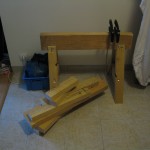
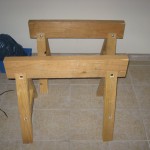
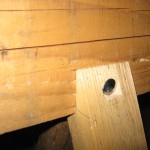
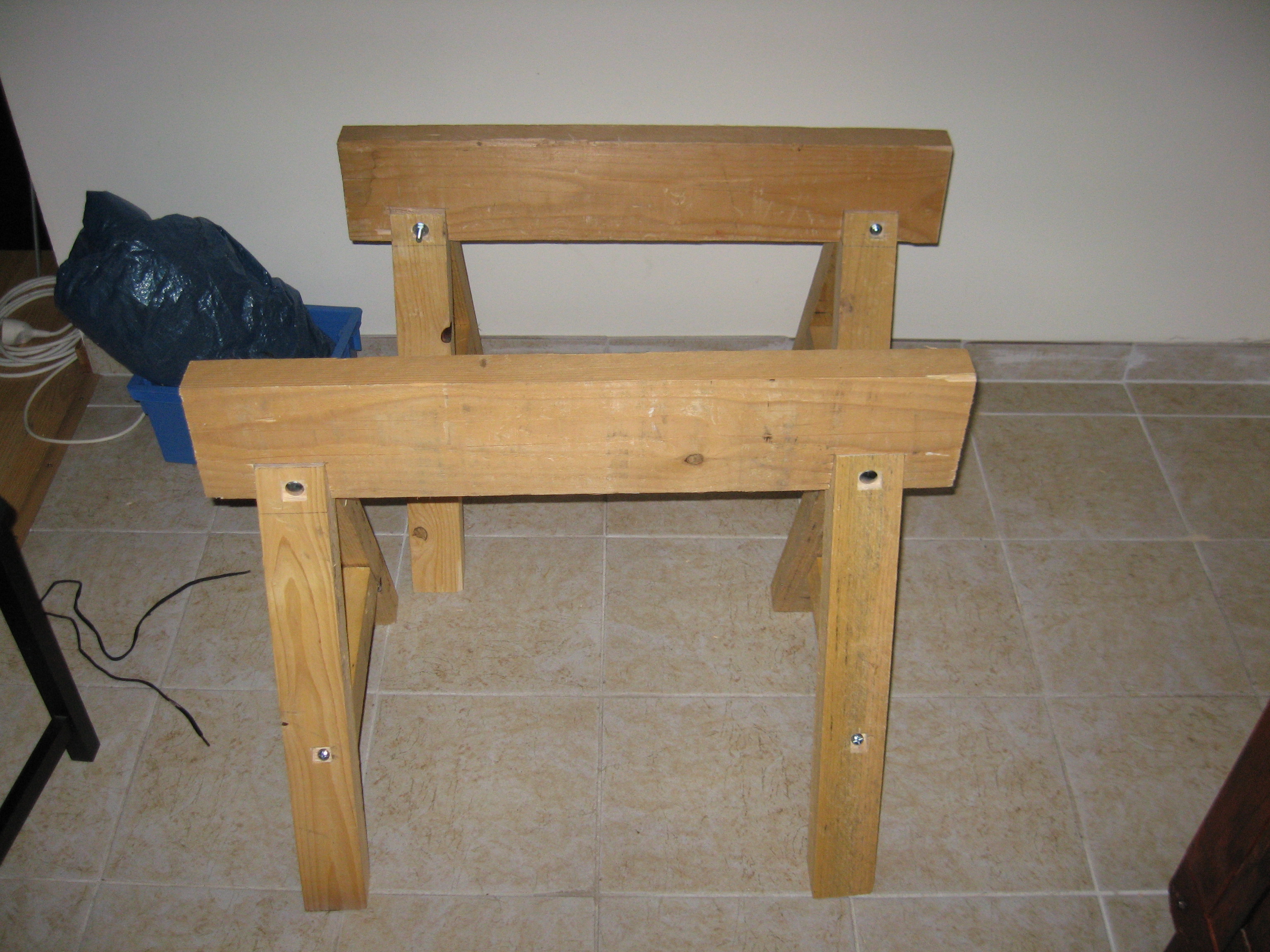
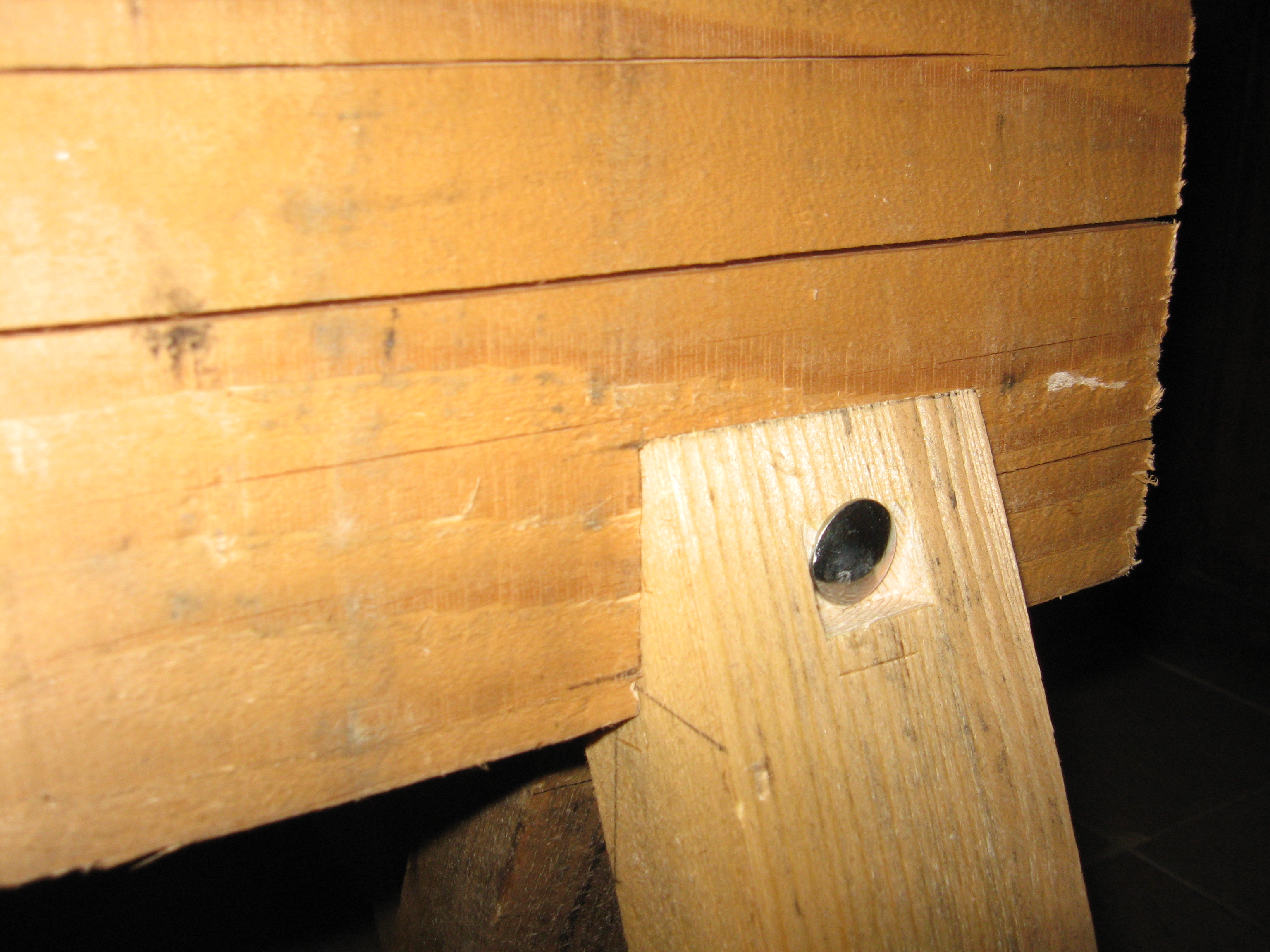
Premier travail de charpente
Après pas mal de préparation et d’affutage des outils, il me semblais qu’il fallait faire de charpente pour de vrai. Et vu que pour la structure il faut que je faire des assemblages dans des gros morceaux de bois, la tradition disait qu’il faut commencer par des tréteaux. J’aurai aimé dépenser un peu et d’acheter du Douglas pour voir comment va ressembler la maison, mais le budget et une manque de temps, m’a orienter vers du sapin bas de gamme. Les traverses sont de ce qui restait de l’abri du jardin (solives) et j’ai acheté les chevrons pour faire les supports. La première photo montre le premier tréteau, et le tas de bois qui allait devenir la seconde. Je suis bien satisfait d’avoir fait tout ça, surtout en sachant que la plutpart des assemblages dans la structure de la maison vont être bien plus simple que celles des tréteaux.
Posted in Uncategorized @fr
Leave a comment
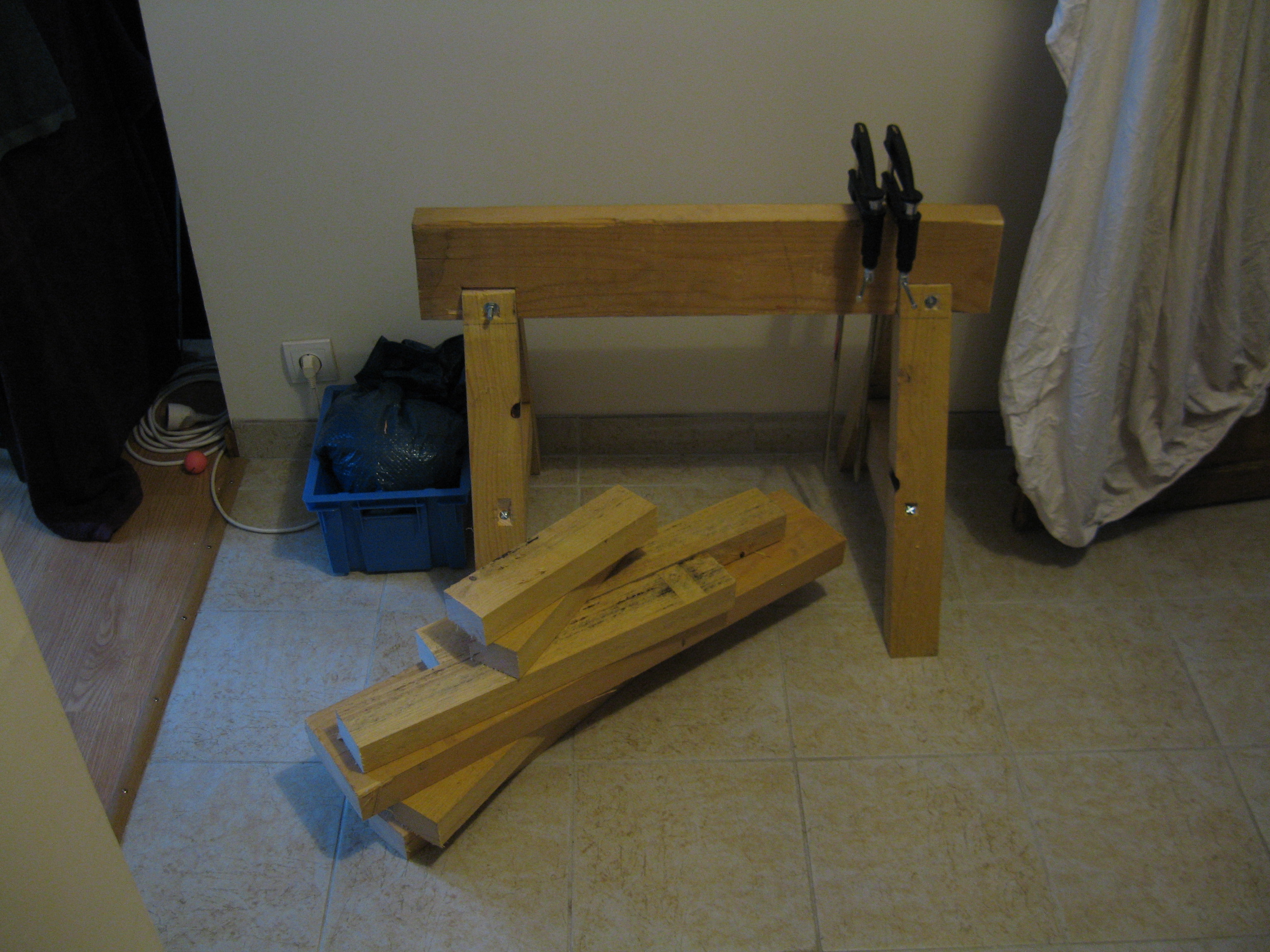
First serious carpentry
After much preparation and sharpening of tools, it seemed high time that I actually did some real carpentry. And given that I need to be cutting joints in some rather large pieces of timber, the traditional starting point was a pair of saw horses. It would have been nice to splash out and buy some chunky Douglas fir to get a real feel for how the house will feel, but budget and time restraints meant that I opted for cheap pine. The top bars are left-overs from the shed build (floor joists) and the rest was bought in for the project. The first picture shows the first completed saw horse, and the pile of timber that would become the second. It’s rather satisfying to have survived this, given that almost all of the joints in the house will be simpler than those required to build the saw horses.
Sunset
Having arrived early afternoon at the plot to find the ground still covered in frost, and spent a whole afternoon without it clearing, we could be forgiven for wondering if we’d bought the right land… until the sun set and we remembered what it was that had caught our eyes on our second visit.

Posted in Uncategorized
Leave a comment
 Le weekend dernier, on s’est fait livrer 10m³ de terre végétale et on a rempli un de nos bacs. Ce weekend on a presque fini le deuxième. La rampe (fabriquée elle aussi de palettes) marchait bien pour les remplir, mais il a fallu déplacer la terre à l’intérieur du bac d’un bout à l’autre, car il n’y a pas la place pour la rampe de l’autre coté. En mettant des palettes sur la terre déjà dans les bacs, on a pu remplir le bac avec moins d’effort. Malheureusement, cette merveilleuse idée ne nous est parvenue qu’à la fin, donc il va falloir attendre le troisième bac pour voir si ça marche bien.
Pour remplir un bac, il nous faut 4 heures, mais un bac par weekend s’avère suffisamment fatiguant, donc on a encore besoin de 2 ou 3 weekends pour les remplir tous.
Posted in Jardin
Leave a comment
Vegetable beds – 2 down (almost), 2 to go.
Last weekend, we took delivery of 10m³ of soil and loaded up one raised bed. This weekend, we almost finished filling the second bed. The ramp (also made of pallets) works well for filling them although the soil then has to be raked across the length of the bed as there isn’t enough room to build it at the other end. By laying pallets on top of the soil we managed to reduce the quantity of raking required. Sadly this was a late invention, so we’ll see how big an effect it has when we come to fill the third bed.
Filling a bed takes us around 4 hours, but one in a weekend is enough to ensure fatigue, so we’re looking at another 2 / 3 weekends to fill them all.
Posted in Garden
10 Comments
Alles volgens plan?
 Het tweede weekend – Het frame van de schuur
We hadden gepland om al het hout bij de houtzagerij bij ons in de buurt te bestellen, maar we hadden er niet op gerekend dat deze mensen ook af en toe vakantie nodig hebben! We moesten dus in heel korte tijd ergens anders hout bestellen en het bleek dat we niet dezelfde afmetingen konden krijgen. In plaats van dikke stevige balken te gebruiken moesten we nu zelf balken in elkaar timmeren van dunner hout om het frame van de schuur mee te bouwen.
Dag 1
 Het is vrijdagochtend, de tent staat, we hebben koffie gedronken en we wachten op het hout dat er om 11 uur zou zijn. Drie uur later is het hout eindelijk geleverd. De vrachtauto rijdt net de hoek om als we erachter komen dat de vloerbalken 4m lang zijn, in plaats van 4,5m. We besluiten dat we geen tijd te verliezen hebben, bedenken een nieuw ontwerp voor de vloer, onderhandelen een uur voordat we een fatsoenlijke korting krijgen en beginnen eindelijk te zagen en hameren. ‘s Avonds is het frame voor de vloer klaar en kunnen de volgende dag de OSB platen erop.
Dag 2
 Op zaterdagochtend liggen de OSB-platen er vlot op, met enig gepuzzel op het eind. Ik neem de auto om de platen voor het dak op te halen.
 Vijf minuten later begint het flink te regenen. Bij mijn terugkomst tref ik Linda aan in een geïmproviseerde tent. Ze is druk aan het timmeren. Dit was het begin van een kletsnat weekend.
 Wanneer we genoeg balken in elkaar getimmerd hebben onder plastic zeilen, beginnen we de eerste muur te bouwen, in de regen… Aan het eind van de eerste dag hadden we verwacht in ieder geval al twee muren te hebben staan. In plaats daarvan hadden we één muur, een natte vloer en een prachtige zonsondergang toen de regen eindelijk verdween.
Dag 3
 De derde dag begint met droog weer een een vrijwel droge vloer. Nu we niet onder zeilen te hoeven werken, gaat het veel sneller. Nog voor de lunch staat de tweede muur ook. Pas nu realiseren we ons hoe groot de schuur eigenlijk zal worden…

 Na de lunch staan al snel de derde en vierde muur. De dakspanten vragen daarentegen om wat improvisatie. Het nieuwe ontwerp maakt dat hier en daar de spanten niet helemaal op de juiste plek vallen. Net als we het laatste dakspant op zijn plaats hebben en ons harde werk aan het bewonderen zijn, begint het te stormen. Dan staan we nu ineens de schuur vast te houden in de wind terwijl we proberen om er een zeil overeen te trekken. Met genoeg steunbalken zodat de schuur niet omvalt en een groot zeil zodat de vloer niet weer nat wordt, gaan we naar bed (…lees tent…).
Dag 4 (Twee dagen te laat!)

De regen is weer gestopt en we wikkelen de schuur in plastic. Vervolgens gaar het dak erop. Tegen het eind van de ochtend zijn we hiermee klaar en vertrekken we. Uiteindelijk hebben we niet veel langer over het bouwen gedaan dan gepland, maar hebben we wel een hele dag verloren door de levering die te laat was en het slechte weer.
Posted in Uncategorized @nl
Leave a comment